Метка: Sparta

  • Apologia of Socrates (Xenophontes)

    Apologia of Socrates (Xenophontes)

    Author of the text: Friedrich Hohenstaufen

    Russian (orig) and Ukrainian versions

    According to Xenophon’s version, Socrates allegedly behaved honorably and majestically at the trial, and he considered his best defense to be his life up to that point. Socrates was not afraid of punishment, because by that time he had already considered death to be preferable to life. He supposedly did not think over his defense speech because he was forbidden by the “gods” themselves, and it was they who suggested to him that it was time to die and opened the easiest way to this goal. But death turns out to be preferable to life for him not because some “post-mortem” will be better than life on earth. That, of course, is also the case, but it is hardly mentioned in Xenophontes’ version. His arguments in favor of death were very down-to-earth, and here he complains about senile difficulties and lack of pleasures. It turns out that here too the argumentation is presented through the prism of sensationalism (as in “Hiero” and “Oeconomicus”). And as it was already mentioned about the dialog “Hiero”, Socrates here also speaks about the “mental” ability to love as one of the most important abilities of a human being in principle. But what is most interesting are Socrates’ own words in response to the judges’ accusations. Here Xenophontes, clearly constructing the character to suit himself and his own views (as, indeed, did Plato), makes Socrates adore Sparta:

    However, Athenians, the god expressed an even higher opinion of the Spartan legislator Lycurgus in his oracle than of me. When he entered the temple, they say, the god addressed him with this salutation: ‘I do not know whether I should call you god or man.’ But he did not equate me with a god, but only recognized that I was far above men.

    Do you know a man who is less than I am a slave to the passions of the flesh? Or a man more unselfish, taking neither gifts nor payment from anyone? Who can you recognize with good reason as more just than one who is so comfortable with his position that he needs nothing from anyone else?

    And what is the reason why, although everyone knows that I have no means of repaying with money, yet many people wish to give me something? And the fact that no one asks me to repay a favor, but many recognize that they owe me a debt of gratitude?

    Not that Socrates himself did not love Sparta, obviously he did (Plato also points to this), but it still seems a very strange speech at the trial, too meaningless a digression, unless the Laconophilic views were part of the prosecution itself (and indirect indications suggest that this was the main motive for his trial). Otherwise, Socrates’ style of defense is very similar to what we see in Plato’s Apologia. We see that Socrates here is still the same snob, claiming to be a superhuman being surrounded by common people. But the dialog is interesting because here the accusers specify their accusations, and it becomes clear that “corrupting youth” implies literally the following things: Socrates allegedly makes young men «obey you more than their parents ” and, in essence, teaches them sophisms. And if Plato is to be believed, he was literally teaching sophisms, even if for a noble purpose. Xenophontus understands so well what Socrates is being attacked for and why, that he even appeals to us:

    If some people on the basis of written and oral testimonies about Socrates think that he could turn people to virtue perfectly well, but was not able to show the way to it, then let them consider not only those conversations of his, in which he with an edifying purpose with the help of questions refuted people who imagined that they knew everything (i.e. Plato’s dialogues), but also his everyday conversations with his friends, and let them then judge whether he was able to correct them.

    In Xenophon’s account, Socrates behaves much more restrained at the trial, and his arguments are already much more solid, and one even gets the feeling that Socrates was actually slandered. He is an ordinary virtuous man who does not engage in such pranks as assigning himself a dinner at the expense of the state as a punishment (in Xenophont’s case he will not assign himself anything because he does not admit his guilt). Xenophontus supports the “meme” about Socrates as an “ethical philosopher” who was not engaged in “physics” because of its uselessness (after all, it is impossible to change planets even after learning the principles of planetary motion, and why study something that is not in our will and is generally useless for life?)

    And he did not argue about the “nature of everything”, as others do for the most part; he did not touch the question of how the “cosmos” so called by philosophers is organized and according to what immutable laws every celestial phenomenon takes place. On the contrary, he even pointed out the folly of those who deal with such problems.

    And by this he tries to say that Socrates does not coincide with what Aristophanes said about him in his comedies. Apparently, this also seemed to be an important part of the accusation, if one has to justify oneself in this way. Here Xenophontes also adds that physics is not useful because all physicist-philosophers disagree with each other and give different theories of matter, motion, etc. The only problem is that the same problems apply to the same ethics… but this example is interesting even just as an illustration of the Greeks’ attitude toward the abundance of “systems” and their mutual contradiction. Since there are so many of them, they are all equally false. This was one of the most likely reasons why the Sophists chose to state relativism. Socrates apparently decided, on the same grounds, to simply state the futility of physics, and did not decide on full relativism. But these are just interesting details, and the main thing is different. The most interesting thing in Xenophontes’ system of excuses seems to be that he himself gives examples that essentially bury Socrates and prove his guilt.

    What was Socrates being tried for?

    The dialog we are about to describe is a textbook example of Socratic sophistry. If it is to be believed, it turns out that Socrates was accused of corrupting youth at least three times, at different periods of Athenian history, under the rule of quite different people: (1) during the Peloponnesian War (Aristophanes’ comedy); (2) after the defeat and under the rule of oligarchs and tyrants (our example); and (3) after the return of democracy (the execution itself). It turns out that this was not a random pretext, but a long-running problem. And the following illustration from Xenophon makes us agree with the charge as never before! This plot goes like this:

    After the victory over Athens and under the patronage of the Spartans, the regime of the “Tyranny of the Thirty”, led by one of Socrates’ disciples (not even one, but at least several, but the main figure was Critias), launches a roller of repression, which affected the aristocrats. Socrates was very indignant about this and allegedly said:

    “It would be strange, it seems to me, if a man, having become a shepherd of a herd of cows and reducing the number and quality of cows, did not recognize himself as a bad shepherd; but it is even stranger that a man, having become the ruler of the state and reducing the number and quality of citizens, is not ashamed of it and does not consider himself a bad ruler of the state”.

    When the tyrants Critias and Charicles were informed of this, they called Socrates to themselves, showed him a certain law and forbade him to speak to young men. One can say that this is a formal reason for punishment, but these same people unceremoniously executed even their own associates (e.g. “the tyrant of thirty” and Theramenes, who was close to Socrates in his views), and here, for some reason, instead of showing him the same things as his associates, they forbid him to communicate with young people! This is a very strange change of subject, and a very mild punishment. It is very hard to explain this behavior. Perhaps the explanation lies in the tyrants’ personal respect for Socrates, who knows? But after such a ruling, Socrates got the right to ask questions about the points he allegedly did not understand:

    Well, I am ready to obey the laws; but in order that I may not imperceptibly, through ignorance, break the law in something, I want to receive from you precise instructions about this: why do you order to abstain from the art of speech, — is it because it, in your opinion, helps to speak rightly, or wrongly? If — to speak rightly, then, obviously, one would have to refrain from speaking rightly; if — to speak wrongly, then, obviously, one should try to speak rightly.

    That is, when he was demanded to stop practicing sophistry, he literally answers in the face of tyrants with a sophistic device. One might suspect that he did this deliberately in such a defiant manner to show his protest. Thereupon “Charicles became angry” (you bet he did), and said:

    When, Socrates, you do not know this, we announce to you this, which is more understandable to you, — that you should not speak to young men at all.

    It is clear that this radicalization was more of a rhetorical one, so that Socrates would get the gist of the claim. But Socrates continues to ironize, and to engage in just what he is being asked to stop doing:

    — Thus, lest there be any doubt, define to me until how old people should be considered young.
    — Until they are allowed to be members of the Council, as men as yet unwise; and thou shalt not speak to men under thirty years of age.
    — And when I buy something, if a man under thirty years of age sells it, neither should I ask how much he sells it for?
    About such things we can. But you, Socrates, mostly ask about what you know; so don’t ask about that.

    Socrates is told bluntly that both he himself and they all know what the problem is, and that the question is solely on the subject of teaching young men sophistic techniques! But Socrates continues to play the fool:

    — So I should not answer if a young man asks me about something I know, such as where Charicles lives or where Critias is?
    About such things it is possible, — answered Charicles.
    Then Kritius said: No, you have to, Socrates , give up these shoemakers, carpenters, blacksmiths: I think they are completely worn out from the fact that they are always on your tongue.

    You can’t get any straighter than that. He is literally asked not to piss people off in the streets with examples of narrow specialists who are “supposedly wise”, when wisdom is not available to anyone. Young men listen to this and then mock their parents in the same way. Socrates is told, not for the first time, “please stop”. But Socrates is inexorable!

    — ‘So,’ replied Socrates, ‘from the things that follow — from justice, piety and all that sort of thing?
    — Yes, by Zeus,” said Charicles, ”and from the shepherds; otherwise, see how you do not reduce the number of cows.

    And here Xenophontus decides that the reason is not that Socrates has been pestering Athenians for more than 30 years, and therefore most citizens do not like him, but only that the tyrants took offense at the metaphor about cows and shepherds! And since then, taking Socrates’ lawyer at his word, all literary criticism considers it not another example of condemnation for corrupting the youth, but an example of banal offense of tyrants who did not understand the greatness of Socrates. In general, this dialogue is given here not by chance, but as evidence in defense of Socrates. If Critias subjected Socrates to repressions, and Socrates himself considered Critias a bad man — then the fact that Critias was a pupil of Socrates loses its significance. He was a pupil, but his teacher condemned him, and they went their separate ways. The second figure with bad fame, among the students of Socrates, was Alkiviades, an ambitious commander, who during the war several times ran from camp to camp, but if averaged, he was a “populist” and rather a supporter of the democratic party of Athens. Alkibiades was also killed by Critias, but still this did not make him a good man in the eyes of the Athenians.

    Xenophontus gives us an example of how Alkibiades learned how to debate from Socrates, but immediately adds that once he realized that he had defeated Pericles in debate, he immediately decided that he didn’t need anything more from Socrates. This is used as a rare case and a private example of real “spoiling of youth”, but in general Socrates is not responsible for the bad character of Alkibiades. Alkibiades and Critias are supposedly just two bad examples, and all the other disciples of Socrates are saints. Let us even suppose that this is true. But much more interesting is what Alkibiades learned from Socrates, and how he “defeated” Pericles in an argument. This is one of the examples that speak of Xenophontes (and Socrates, Plato, and all associated with them) as a rigid conservative.

    — ‘Tell me, Pericles,’ began Alkibiades, ‘could you explain to me what law is?
    — ‘Certainly,’ answered Pericles.
    — Then explain to me, for the sake of the gods, — said Alkibiades, — when I hear people praised for their respect for the law, I think that such praise has hardly the right to receive someone who does not know what the law is.
    — Do you want to know, Alcibiades, what the law is? — Pericles answered. — Your wish is not difficult to fulfill: laws are all that the people in the assembly will accept and write with an indication of what should be done and what should not.
    — What thought the people are guided by in this — good should be done or bad?
    — Good, by Zeus, my boy, — answered Pericles, — certainly not bad.
    — And if not the people, but, as happens in oligarchies, a few people gather and write what should be done — what is it?
    — Everything, — answered Pericles, — that will write those who rule in the state, having discussed what should be done, is called law.
    — So if also a tyrant, who rules in the state, writes to the citizens what should be done, and this is law?
    — Yes, — answered Pericles, — and everything that writes the tyrant, while the power is in his hands, is also called law.
    — And violence and lawlessness,’ asked Alcibiades, ‘what is it, Pericles? Is not it when the strong forces the weak not by persuasion, but by force to do as he pleases?
    — ‘I think so,’ said Pericles.
    — So, everything that the tyrant writes, not by persuasion, but by force forcing citizens to do, is lawlessness?
    — It seems to me, yes, — answered Pericles. — I take back my words that everything that the tyrant writes, without convincing citizens, is law.
    — And all that is written by a minority, without convincing the majority, but using their power, should we call it violence, or should not?
    — It seems to me, — answered Pericles, — everything that someone forces someone to do without convincing, — no matter whether he writes it or not — will be more violence than law.
    Then what the whole nation writes, using its power over the wealthy without convincing them, is more violence than law?
    Yes, Alkiviad, — answered Pericles, — and we in your years were masters of such things: we were busy with it and invented the same things, which, apparently, busy now and you (this, apparently Pericles realized that caught on sophism).
    Alcibiades said to this:
    — Ah, if, Pericles, I had been with you at the time when you surpassed yourself in this skill!

    In the eyes of Xenophontes, Alkibiades had won, and proved that democracy = tyranny of the majority over the minority. And he learned it from Socrates. This is not a bad example, but an example of success, after which Socrates was no longer needed by Alkibiades, and therefore, after such a “base” — Alkibiades became corrupted, and he himself became no better than Pericles and tyrants.


    It turns out that Xenophontus literally shows that Socrates even in other regimes and by other people was accused of corrupting the youth, as well as the fact that he was an engaged supporter of the aristocracy (and this in a democratic regime, in the very one where he was finally executed, could be an additional argument in favor of execution). Xenophontus even expands the variation of the charges, and speaks of more such charges: (1) “Socrates taught contemptuous treatment of fathers, he inculcated the belief that he made them smarter than their fathers, and he inculcated disrespect not only for fathers but also for other relatives”. (2) «Socrates of the most famous poets chose the most immoral places and inculcated criminal thoughts and the desire for tyranny ”.

    Of the first we have already spoken; only the connotation changes here. But the second is very interesting. From the point of view of the democratic regime, indeed, Socrates sought to overthrow democracy, and this in any form is already “tyranny”. Xenophontes, on the other hand, presents his own ideas about the term “tyranny”, and, of course, Socrates did not propose such a term (cf. how a Marxist proves that Stalinism is not fascism, referring to his own definitions of fascism). Two specific quotations were allegedly cited against Socrates, and Xenophontus fights them off without difficulty. Of course, being the author of the book, Xenophontus can paint his accusers as fools; and in the way it is presented to us, it is hard to disagree. But what quotations are given (the quotations themselves at least should not be spurious)? These are:

    1) “Work is by no means alone disgraceful, but disgrace is only idleness.”
    2) A lengthy quote from Homer about Odysseus striking with his rod Tersitus, who dared to speak out against the aristocracy in the name of the people.

    In the first case Xenophontus tries to convince us that Socrates meant agitation for labor, in the spirit of the Communists. In the second case, we have a not particularly convincing excuse that Socrates, using Tersitus as an example, supposedly condemns all those who shake the boat of the state, not just the poor. And while the second quotation is such a classic moralizing example of aristocrats that everything is clear here; the first might well have meant that any means are good for overthrowing democracy. In the context of all the things Socrates says outside the court — these quotes were really used as political. But as part of the justification, he suddenly starts to mean “other”. However, Xenophontes, which is especially funny, managed to shove the quotation of Theognides (a man who in poetry calls almost to cut the throats of nobles in the name of aristocracy) directly into Socrates’ defense speech at the trial. The very lines Socrates uses are very neutral out of context, and are about how citizens should be educated:

    From the noble you will learn goodness; but if with the bad.
    You will lose your former mind.

    And there may not be any subtext here. But the very fact of such citations says something, at least about what literature Socrates was oriented to. The noble is Theognides’ = aristocrats, and the “bad” is the people/crowd. It goes without saying that Socrates did not quote the harshest things from Theognides, for which aristocrats love him, in his defense at the trial, because he is not a complete fool. But he could have quoted it:

    With a strong heel crush this unreasonable nigger to death.
    Beat it with a sharp heel, bend its neck under the yoke.

    But he was presented with a quotation from Homer about Tersitus, which is as close to this theme as possible. If it really was one of the most popular quotes in Socrates’ repertoire, it is very hard to get away with it. For us all this is important only because even in the acquittal speeches Xenophontus managed to add weight to the accusation, and a little better revealed the line of attack of Socrates’ enemies.
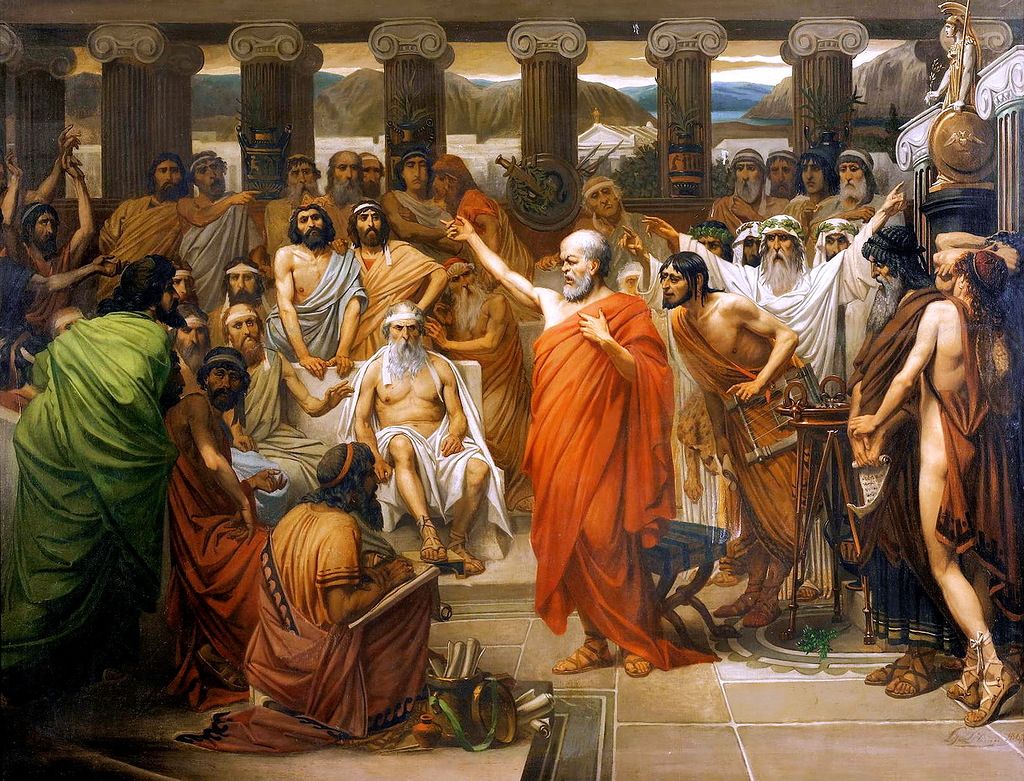
    The political position of Socrates and his disciples

    The only thing to be said about Socrates’ accusation is that you don’t really get executed for such a thing. So in any case the judges were wrong. But it should be understood that they were not “wrong” in the charges themselves, they are not blind and stupid, as the whole scholarly community still says. It’s just that even if Socrates did all the things they charged him with, it wasn’t a violation of the laws of Athens, and so yes, the persecution was purely political. For that matter, we too would have condemned the execution of Socrates and stood in his defense, just as we should have condemned the attempted executions of Anaxagoras and Protagoras. It doesn’t matter that Socrates was a fascist bastard, the law didn’t forbid him to be one. If he had to be put down, it would have been better to do it outside the judicial system.

    Just now we can sort out whether Socrates was a “fascist” and what his political views really were. Here we will look at Xenophon’s Greek History. One of the most interesting events here is the last major victory of Athens over Sparta during the “Peloponnesian War”. The very battle after which all the victorious generals were put on trial and executed. It is this event that Xenophontus and Plato emphasize, showing that Socrates was then almost the only person from the panel of judges who opposed this decision and tried to save the strategists from execution. This example in their eyes proves Socrates’ patriotism. Usually this event (see “Trial of the strategists” on Wikipedia) is discussed in the abstract. The people executed the generals for not even attempting to rescue survivors and pick up the bodies of fallen allies after the battle. The defense usually claims that a storm prevented them from doing so. This is a religious issue because not picking up the bodies of the fallen was considered horrible blasphemy. What is surprising here is that Socrates and Xenophontes, who are always on the side of maximizing religiosity, in this case put efficiency above religious tradition. Here we can suspect that they were not satisfied with the very fact that victorious generals are judged by some blacks, and all other circumstances are secondary. Or we can simply say that they thought here as pragmatists. There are many variants, but the reasons for the execution, and the reasons for the defense of Socrates, hardly had a partisan character.

    Be that as it may, it is important to record that Socrates here was against the condemnation, while one of the accusers was Theramenes. In that campaign it was Theramenes who was ordered to take away the dead, but he could not, referring to the storm. They could hang all the dogs on him, but he justified himself in such a way that it turned out that the generals themselves did not know whether the weather was normal or not, but just went home without a second thought. And Feramen at least tried, and besides, he had a subordinate position, so it was not the highest responsibility. The generals tried to sink Feramen, but in the end he sank them.


    After this event, Sparta was able to gain the support of Cyrus, the prince of Persia, and with his money and fleet — defeated Athens. Xenophontus in his book exults on this occasion and relishes every move of Sparta and every humiliation of the Athenians. The final peace treaty, i.e. in essence capitulation, was signed by the very same Theramenes. How Socrates felt about it, we can only guess. Now the Athenians had to establish oligarchic rule, as elsewhere in the territories subject to Sparta.

    This oligarchic system began in this way: the people decided to elect thirty men to compile a code of laws in the spirit of the old days; these laws were to form the basis of the new state system.

    Thus began the “Tyranny of the Thirty”, at the head of which stood the student of Socrates — Kritias, as well as another uncle of Plato — Harmides, and many aristocrats close to them. The top of the “thirty” included Theramenes. Moderate conservatives, such as Xenophontes, were dissatisfied with the fact that the issuance of “laws in the spirit of antiquity” delayed, and thus, “thirty” indefinitely prolonged their stay in power. And the power was used for repressive purges, both in the camp of democrats and among discontented aristocrats (that is why the tyranny was condemned by Socrates, Plato and Xenophontes). And for their own safety, the “thirty” requested Sparta to garrison Athens at the city’s own expense.

    The next important moment in the “History” Xenophontes — is the image of the opposition that opposed the tyranny of the thirty. It was headed by Theramenes. It should be understood that this character is far from an exemplary ideal, and in addition to the fact that he was among the “tyrants” and appeared in the case with the fleet, he became famous for the fact that he changed parties and ran from camp to camp several times. The same Alkibiades was reviled by everyone for the same behavior. Like many conservatives, Theramenes was in the circle of Socrates, but also in the circle of the sophist Prodicus. He was one of those who led the oligarchic coup of 411, but he also became the one who strangled this coup. And it was Theramenes who made the final peace with Sparta. Just as in the previous coup he was among the leaders of the oligarchy, but was horrified by their “righteousness”, and opposed, the same thing happened in the case of the “tyranny of the thirty”. Theramenes criticized almost every move of Critias. Let us recall that Kritias began arbitrary repression, took away the arms of all citizens, and granted political rights to only 3000 Athenians chosen at his own discretion, not to mention that he introduced a Spartan garrison of his own free will. Resistance on the part of Theramenes began to frighten Critias, so he too fell under the gusher of repression.

    Theramenes was accused, to cut a long story short, of not adoring Sparta enough. From the defense of Theramenes we will cite only the most basic of his personal political position. He is a patriot of Athens, and wanted to see a conservative Athens, not a copy of Sparta. He was particularly incensed that Critias had executed many aristocrats, simply for not being principled enough in their hostility to democracy. Among other things, Theramenes even condemned the exile of such future leaders of democracy as Thrasybulus and Anitus. Yes, the same Anitus who would later judge Socrates. From Theramenes’ point of view — this only strengthened the enemies of the aristocracy:

    Do you really think that Thrasybulus, Anitus and the other exiles would be more eager to see the kind of order that I seek to bring about here than the state of affairs to which my co-rulers have brought the state? No, I think that in the present state of things they are convinced that they meet with implicit sympathy everywhere; but if we succeeded in bringing the best elements of the population to our side, they would consider the very idea of ever returning to their native land almost unfulfilled.

    It is evident that the positions of Feramen and Anita are diametrically opposed. From what has already been said, it is clear that he is not even a moderate democrat, but he is not a supporter of Critias either. This can be called “moderate” or “classical” conservatism. He himself describes his position as follows:

    I, however, Kritias, all the time tirelessly fight the extreme currents: I fight with those democrats who believe that the real democracy — only when the government involves slaves and beggars, who, in need of drachma, ready to sell the state for drachma; I fight and with those oligarchs who believe that the real oligarchy — only when the state is ruled at will by a few unlimited lords. I have always — both before and now — been in favor of a system in which power would belong to those who are able to defend the state from the enemy, fighting on horseback or in heavy armor. Come on, Critias, show me a case in which I have tried to remove good citizens from participation in public affairs by siding with extreme democrats or unlimited tyrants.

    And even within the framework of the laws that the Thirty had enacted, Theramenes was going to be acquitted. But Critias decided to kill Theramenes outside the framework of his own law. The scene of his murder is very long and pathos-laden, but we won’t drag it out. The main thing here is that Xenophontes treats Theramenes with obvious sympathy, despite all the “controversial” sides. It would seem that Socrates, Xenophontes, Plato, and all the members of their circle (among whom, among others, was the same Kritias!), all of them were supporters of Sparta and aristocracy. Why, when their comrade and like-minded Kritias finally took power and began to realize their ideals — they supported Theramenes? What does that mean? They were not supporters of Sparta? No, it means they were moderate conservatives like Theramenes. This politician is a manifestation of their political ideas. The question was only about the degree of radicalism, not the substance of the ideas themselves.


    And here it is interesting to add that of the extant sources, the most praise for Theramenes was given by such conservative-minded supporters of the Socratic/Platonic tradition as Isocrates and Aristotle. Aristotle even called Theramenes the ideal model of a politician. Later, the historian Diodorus would even write a scene that is considered to be not authentic (for Socrates’ disciples would obviously have mentioned it if it were true), but which clearly appeared for a reason:

    Theramenes bore the misfortune courageously, for he had learned from Socrates the deep-philosophical view of things, but the rest of the crowd sympathized with Theramenes’ misfortune. No one dared to help him, however, for he was surrounded on all sides by a mass of armed men. Only the philosopher Socrates and two of his disciples ran up to him and tried to wrest him from the hands of the attendants. Theramenes begged him not to do so. “Of course, he remarked, I am deeply touched by your friendship and courage; but it would be the greatest misfortune for myself if I should find myself responsible for the death of men so devoted to me.” Socrates and his disciples, seeing that no one was coming to their aid, and that the arrogance of their triumphant opponents was increasing, ceased their attempt.

    Suppose, let us say, that this is a fiction. But Diodorus clearly felt that Socrates’ group was ideologically in line with the ideals of Theramenes. It is not surprising (given Theramenes’ own speeches above) that when Anitus returned to power, Socrates’ group fell under the gusher of repression, not immediately, but still fell. They were moderate but still laconophiles.

    Systematic philistine v. Epicurus

    But if even Socrates was rightly accused of corrupting the youth (at least in the paradigm of Athenian public opinion), then from Xenophon’s point of view, Socrates’ bad reputation was to blame for his dialogues with citizens, which were later recorded by Plato. Xenophontus, as we have seen, thought it unfair to judge Socrates only from this side, and tried to show what he was like in his narrow circle of friends. In these conversations Socrates tells us the philistine “base” about intelligent design, i.e. that God created everything for a purpose, and that grass was created for the sake of the cow’s stomach, and her stomach for the sake of grass (teleology). He also talked about abstaining from all pleasures, respecting one’s parents, etc., etc., a general conservative base. In one of many dialogues, Socrates takes the opportunity to reveal his ideas about teleology (target causes), and in the process prove the existence of gods. Teleology itself is a bastardization of thought that doesn’t even deserve criticism (seriously, just read the arguments in its favor). But Socrates is not just stating his views to the ceiling, but by talking to a certain opponent named Aristodemus. It so happens that this man in his argumentation anticipates Epicurus, and for this reason he is worth our attention. Touching upon teleology, they moved on to the more global question of whether the gods take part in our lives at all, and Aristodemus insists that they do not. Here we see the justification of the deism position .

    Noticing that he does not sacrifice to the gods, does not pray to them and does not resort to divination, but, on the contrary, even laughs at those who do it, Socrates addressed him with the following question:
    — Tell me, Aristodemus, are there people whose wisdom you admire?
    — Yes, — he answered.
    — Give us their names,” said Socrates.
    — In epic poetry I admire Homer most of all, in dithyramb — Melanippides, in tragedy — Sophocles, in sculpture — Polycletus, in painting — Zeuxides.
    — Who do you think deserves more admiration, — is it he who makes images devoid of reason and movement, or he who creates living beings, intelligent and self-motivated?
    — By Zeus, much more the one who creates living beings, if indeed they become so not by some accident but by reason.

    And after the standard arguments of teleology in the spirit of “the gods created the cow so that man could have milk”, and the gods gave us reason to compensate for the lack of fur and claws, by which Socrates supposedly proves a constant care for us (and in fact only care during the act of creation, that’s in the best case), Aristodemus expresses a typical Epicurean attitude to the gods.

    — Is there nothing sensible anywhere else? Can you really think so, knowing that the body contains only a small part of the vast earth and a tiny fraction of the vast amount of liquid? In the same way, from each of the other elements, which are undoubtedly great, you have received a tiny particle for the composition of your body; only the mind, which, therefore, is nowhere to be found, by some happy accident, do you think you have taken it all for yourself, and this world, vast, boundless in its multiplicity, do you think it is due to some madness that it remains in such order?
    — Yes, by Zeus, I think so: I see no rulers there, as I see masters in the works here.
    — Nor do you see your soul, but it is the mistress of the body: therefore, if you reason thus, you have a right to say that you do nothing by reason, but everything by chance.
    Here Aristodemus said:
    — No, Socrates, right, I do not despise the deity, but, on the contrary, I consider him too majestic that he needs still reverence on my part.
    — If so, — objected Socrates, — then the more majestic the deity, which, however, dignifies you with his care, the more you should honor him.
    — Rest assured, — replied Aristodemus, — if I had come to the conviction that the gods at least some care for people, I would not treat them with disdain.

    In general, in relatively small texts Xenophont touches directly on a lot of issues. Among them are the issues of art, where Socrates gives evaluations close to the positions of classicism. For example, in a conversation with the artist Parrassius, Socrates proves that the artist is capable of expressing mental qualities by conveying emotions in the movements of statues, in facial expressions, and in the depiction of the gaze. Whereas Parrhasius himself, up until this conversation, believed that “intangible” things could not be depicted. So overall yes, we see a very conservative, idealistic thinker who can even be called religious. Not only does he honor the gods, but literally every action requires to be accompanied by sacrifices in favor of the gods. But it is funny that Xenophontus accuses Plato of giving Socrates a bad reputation, saying that it was he who made the teacher look like a sophist clown. While Xenophontes himself left no less unpleasant examples for Socrates. In some places he does it even more harshly than Plato. Take, for example, the story about the dispute between Socrates and his student, the hedonist Aristippus (it turns out that there are more careless students than just Critias and Alkibiades).

    One day Aristippus took it upon himself to knock Socrates down, just as he himself had been knocked down by Socrates before. But Socrates, having in mind the benefit of his interlocutors, answered him not as people who fear that their words will not be interpreted in some other sense, but as a man convinced that he is just doing his duty. The case was like this: Aristippus asked Socrates if he knew anything good. If Socrates had named something like food, drink, money, health, strength, courage, Aristippus would have argued that these were sometimes evil. But Socrates, meaning that if anything bothers us, we look for means to get rid of it, gave the most dignified answer:
    — ‘You ask me,’ he said, ‘do I know anything good for fever?
    — ‘No,’ replied Aristippus.
    — ‘Perhaps for eye-sickness?
    — ‘Neither do I.
    — How about for hunger?
    — Not from hunger either.
    — Well, if you ask me if I know anything so good that it is not good from anything, I do not know it, and I do not want to know it.

    That is, when Socrates was presented with exactly the same questions with which he himself asks everyone — he answered that either he would give a private definition (like the sophists), or he would not say anything. This is what all his interlocutors do. But only they are dumb, and Socrates is smart. Apparently, Socrates is smart only in that he did not let himself be drawn into this. But already here it becomes obvious that Socrates himself treats the “Socratic dialogues” as a mockery. In another fragment Socrates in general responds identically to the sophists, but according to Xenophontes it is all very wise:

    Aristippus asked him if he knew anything beautiful.
    S: Even many such things.
    A: Are they all similar one to another?
    S: No, as unlike some as possible.
    A: So how can the unlike be beautiful?
    S: And this is how: a man who is beautiful in running, by Zeus, is not like another who is beautiful in wrestling; a shield, beautiful for defense, is as unlike as possible to a throwing spear, beautiful for flying fast with power.
    A: Your answer is not at all different from the answer to my question whether you know anything good.
    S: Do you think that good is one thing and beautiful is another? Don’t you know that everything in relation to the same thing is beautiful and good? So, first of all, about spiritual virtues it cannot be said that they are in relation to some objects something good and in relation to others something beautiful; then, people are called both beautiful and good in the same respect and in relation to the same objects; also in relation to the same objects the human body seems both beautiful and good; equally, everything that people use is considered both beautiful and good in relation to the same objects in relation to which it is useful.
    A: So is a dung-basket a beautiful object?
    S: Yes, by Zeus, and a golden shield is an ugly object, if for its purpose the former is made beautifully and the latter badly.
    A: Do you mean to say that the same objects are both beautiful and ugly?
    S: Yes, by Zeus, as well as good and bad: often what is good for hunger is bad for fever, and what is good for fever is bad for hunger; often what is beautiful for running is ugly for fighting, and what is beautiful for fighting is ugly for running: because everything is good and beautiful in relation to what it is well adapted for, and, conversely, bad and ugly in relation to what it is badly adapted for.

    Xenophontes’ version is an unusual character altogether; his version of Socrates holds that although people are of different qualities from birth (for physiological reasons), education plays a huge role and virtue can be taught. On this point he is again hardly different from the Sophists. And in one of the sketches Xenophontus even shows Socrates interacting with the hetaera Theodotas. When the students began to talk about popular rumors about her beauty, Socrates decided that it is not enough to listen, it is necessary to evaluate it! And he led the whole crowd of listeners to her, and he evaluated her very highly, and, in fact, began to openly flirt with her (!).

    — So how could I arouse hunger for what I have? — Theodota asked.
    — And here’s how, by Zeus, — replied Socrates. — First of all, if you will not offer it, or remember when people are full, until they will not pass the feeling of satiety and will not appear again desire; then, when they have a desire, you will remind them of it only in the most modest form, so that it does not seem that you yourself impose on them with your love, but, on the contrary, that you avoid it, until finally their passion does not reach the highest limit: at that moment, the same gifts have a much higher price than if you offer them while there is still no passion.
    Here Theodotus said:
    — Why don’t you, Socrates, hunt for friends with me!
    — Well, if only you persuade me, — replied Socrates.
    — And how can I persuade you? — Theodotus asked.
    — You think about it yourself and find such a way, if there is a need for me, — replied Socrates.
    — So you come to me more often, — said Theodota.

    In the end, of course, Socrates will turn on the irony and excuse himself from dating, hinting that he has some better “girls” (and by girls he means his friends-students) and therefore it is unlikely that he will have enough time for one more. But the very fact that Socrates quietly visits hetaera, and is not ashamed of their society (Socrates is even proud of his friendship with Aspasia, the wife of Pericles, the leader of democracy and an enemy of Sparta), attends feasts, and behaves there like an ordinary partygoer (see “Feast” by Xenophontes); all this makes him, on the one hand, an ordinary man without the aplomb of an “ascetic philosopher”, but on the other hand, shows him from the side of an ordinary sophist of his time.

    The only thing that makes Socrates special, sharply different from other sophists, is his principled advocacy of the principles of meritocracy. Professional managers should rule, and all things should be done by specialists in their field (whereas the sophists insisted that everyone could do as many different things as possible). Moreover, the notion of “happy life”, which Socrates, like Democritus, makes the central notion of philosophy, is associated with virtue in the sense of “doing good deeds”, i.e. with active civil life on patsan notions (cf. Stoics). Otherwise, he is conservative, traditional, religious, but as a rule “moderately”, without fanaticism. An ordinary patriarchal man, which in modern times are plentiful in every run-down village. I would say that in modern terms Socrates is more of a “right-wing radical” than a fascist; and in the realities of that time, his political representative could be the aristocrat Theramenes.
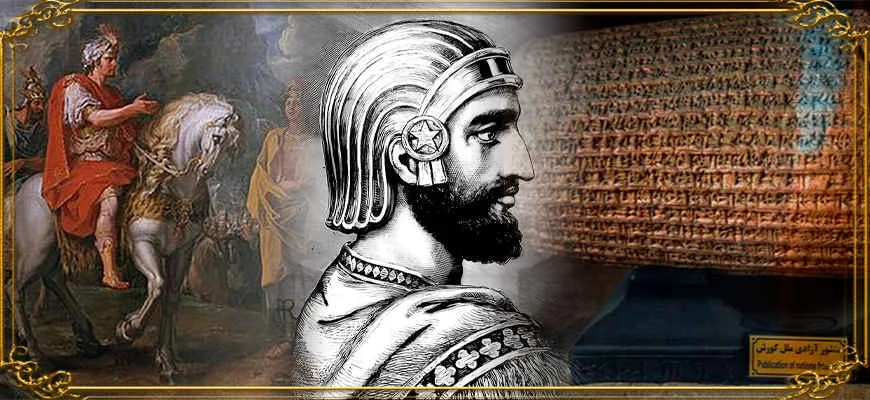
  • Xenophonte on the “Enlightened Monarch” (Cyropaedia, Hiero, Agesilaus)

    Xenophonte on the “Enlightened Monarch” (Cyropaedia, Hiero, Agesilaus)

    Author of the text: Friedrich Hohenstaufen

    Russian and Ukrainian versions

    In this paper we will combine reviews of several works by Xenophon because they are all linked by one conceptual theme — the education of the ruler. This theme is presented in three ways. In the historical novel “Cyropaedia” the best example is given, where they show an idealized Persian monarch, his growth from childhood to the deepest old age. In the panegyric on the death of Xenophon’s friend and patron, the king of Sparta named “Agesilaus” — show a rather more formed ideal, without its long formation, but the essence is about the same. By looking at Agesilaus, we can learn something useful. Well and the dialog “Hiero”, about the disadvantages of tyranny, where the protagonist is a man already formed into a tyrant, but who still suffers from his position and would like to change for the better. He is given instructions that he never takes advantage of. But we consider it in the same series of essays, because admonitions to the monarch for his improvement are, in principle, also part of the general theme of “education of the ruler” and “enlightened monarch.”

    Immediately it is worth saying that in terms of content the most interesting will be “Hiero”, so we recommend going straight to it. “Agesilaus” appears here rather for statistics, because the work is very secondary, but ‘Cyropaedia’, although it is the most significant work in this list, is a very voluminous work, and reading its description will be no less tedious than reading the original.

    Cyropedia — a success story

    One of the first works in world literature devoted to the theme of educating an “enlightened monarch” is Xenophonte’s Cyropaedia. Given that the author of the work was Greek, it is particularly interesting that this monarch is Persian. Especially since, as a rule, pro-Spartan Greeks and lovers of aristocracy (and Xenophontes was such) opposed Persia in order to shift internal squabbles to an external enemy, while increasing the importance of the land army, while democrats showed loyalty to Persia as a profitable market. But here the opposite is happening. Of course, this is partly due to the fact that already at the end of the Peloponnesian War, following the “divide and rule” policy, Persia helped Sparta to defeat Athens and become a hegemon; and partly due to the fact that Xenophontes himself fought in the intra-Persian wars on the side of one of the princes (see “Anabasis”).

    No matter how Xenophontus viewed modern Persia, at least at the time of its foundation, it was an excellent country, where aristocrats ruled, the refusal of luxury was cultivated (in the ruling classes), agricultural traditions were inculcated, etc. (he speaks about it in his work “Oeconomicus”). In a sense, Persia is painted as the same Sparta, but only of enormous size. The main achievement of Persia was that its monarch was subjected to people from the most diverse nations and cultures, without having the opportunity to see in person the king they served. He deliberately emphasizes that all countries of the world have a national character, whereas Persia is a multinational empire. This degree of “voluntary” submission to kings is, in Xenophon’s eyes, the main reason to admire their polity; unlike them, the Greeks can hardly be forced to obey even a man they know well. That is why “Cyropaedia” begins with a comparison of the work of a shepherd and a monarch. Humans, unlike animals, are supposedly very willful, and do not want to obey; they rebel at the first convenient reason.

    On the basis of all this we thought that it is much easier for man to establish his dominance over all other living beings than over humans. But after learning about the life of Cyrus the Persian, who became the ruler of many subordinate people, states and nations, we were forced to change our opinion and recognize that the establishment of power over people should not be considered a difficult or impossible enterprise, if you take it with knowledge.

    Thanks to Cyrus we have learned that the difference between man and animal is not so great as it seems. Governing nations is like governing cattle. It is clear that the main focus of this novel (“Cyropaedia” is considered more of a literary work than a scientific-historical work) is on the upbringing of Cyrus, who will create this magnificent empire. Xenophonte wants to show us the way to create an ideal ruler, not just state the fact of Persia’s superiority over the rest of the states. But of course, it’s not just about upbringing, it’s also about Cyrus’ semi-divine ancestry (through lineage from the hero Perseus himself! That’s where the name of the state “Persia” comes from). The noble blood also does its work.

    As it is said in tales and sung in the songs of barbarians, Cyrus was a young man of rare beauty; he was distinguished by extraordinary ambition and curiosity, could dare any feat and any danger to be exposed for the sake of glory.

    The upbringing of children, at least among the elite, is very close to Spartan (once again: this is a novel, and here Xenophontus is trying to push his ideals, and in many ways they are Spartan). The Persian government quarter is deliberately cleansed of merchants so that “their coarse voices ‘ are not heard and so that the ’assembly” of these people “does not mingle with the noble and well-bred”. This beautiful place, in which only the “noble” live, is divided into four sections, according to age; and, as in Sparta, it is the old men who educate the young, because only they are able to educate the children in the best way. Of course, this education is of a paramilitary nature. And just as in Xenophon’s “Lacedaemonian Politics”, in Persia the ability to fulfill any orders of those in power as quickly as possible is valued.

    Persian laws contain preventive measures and from the very beginning educate citizens so that they will never allow themselves a bad or shameful act.

    If in Greece children go to school to learn literacy, in Persia they go to school to learn justice. Why these two things (literacy and justice) are opposed is not clear. But what is clear is that much of the time in Persian school takes place in show trials. Children are constantly being tried, similar to formal courts, for all their misdeeds. They are taught asceticism, patience for hunger and thirst, and basic archery and spear throwing skills. The principle of “respect your elders” plays a big role. And since all elders are role models, the children grow up to be perfect.


    In adolescence, children begin to perform more formal service, reminiscent of the police, and occasionally participate in hunting parties organized for kings and aristocrats. Engaging in hunting only reinforces all the previously learned skills of the ascetic warrior. Basically, here we see everything the same as in the “Lacedaemonian Polity”, but in a slightly smoothed out form. In time, the teenager passes into the category of “mature husband”, who, in principle, continues to do all the same things as the teenager, but only even more professionally, in addition to learning to fight in close combat. But even the “mature husband” is cut off from the administration of the state. All administrative affairs fall to the elders, who no longer fight, but are exclusively engaged in administration. This is a kind of career ladder of 4 stages, which must be passed step by step (like the “magistracy” in Rome, only very poor and almost without changes in duties). But participation in this career ladder only applies to the aristocracy. Those who can’t put their children in public school, those people have their children at home, and most likely they will simply inherit their parents’ civilian profession.

    Even to this day there are customs which testify to the moderation of their food and the care expended in digesting and assimilating it. Thus, in Persians it is considered indecent to spit and blow one‘s nose, to walk with a belly bloated with gas. It is considered disgraceful to leave in full view of everyone in order to urinate or for other natural needs. Persians may do so because they lead a moderate life and use up the moisture in their bodies in strenuous physical exertion, so that it finds its way out in other ways.

    This is just a funny fragment, and Herodotus writes about the same things. It turns out that in Greece it was customary to urinate and piss in the street, if this is given as an example for the Greek reader. But the fact that Persians do not piss, but sweat, looks like some “meme” about princesses. Further this theme, i.e. constant exercise to go to the toilet less, will be heard many times.


    In general, after such a description of the Persian education system, Xenophontus moves on to the prince Cyrus. Until he was 12 years old, Cyrus studied like all other children (only much better), until he had an audience with the king of Midia, his grandfather, who was very interested in his grandson’s success. After their meeting, Cyrus continued his education already at court, so it was a little different from the typical one. The main peculiarity of the situation was that his grandfather was a Musselman, while Cyrus himself was a Persian. At this time Persia was still only a small province of Mysia, and on this Xenophontus draws contrasts. The manners of King Astyages are much more depraved than those of the Persians, and so the king meets Cyrus in a luxurious purple robe with gold jewelry. And so when he gives a sumptuous lunch, little Cyrus will “involuntarily” start teaching his grandfather about manners:

    — Does not this dinner seem to you much more sumptuous than that which the Persians have? — Astiag objected.
    — No, grandfather, it does not. We reach satiety in a much simpler and shorter way than you do. It is customary for us to satisfy our hunger with bread and meat, while you strive for the same goal as we do, but you make many deviations on the way and, wandering in different directions, hardly come to the place where we have already come long ago.

    And then Cyrus gives his grandfather a lesson in practical stoicism, giving all his meat to the servants for good service, and leaving himself nothing at all. The whole of Cyrus’ “education” is composed in such moralizing. We are demonstratively shown the difference between power based on law (Persians) and power based on the will of a tyrant (Midians), etc., etc. The Persians are always analogous to the Spartan Greeks. And it was only at the expense of Persian morals that Cyrus was able to achieve immense popularity at the Midean court. The poor Musselmen had never seen a man who was not a rusty brute, and they lined up for the advice of the ideal man. His only disadvantage, against the background of the Spartans, was only that he liked to talk a lot (but even this is here called forgivable). And the main reason for his success was his desire to achieve victories where you are weak, through stoic endurance (what is not another manual on business stoicism?).

    Cyrus passed his test of courage in practice, during Assyria’s attack on their country. By making a reckless attack bordering on suicide, he was able to break a superior enemy. While this is usually condemned, here Xenophonte considers Cyrus’ act more of a good thing. The risk was rewarded (another success of business stoicism) and Cyrus became the most popular man in the country.

    Cyrus returned home to his Persian province, already a star of statesmanlike proportions. The local Persians were picky in their attempts to convict him of moral decay, but he was quick to prove that his Spartan Persian disposition had hardly deteriorated after living in a luxurious palace. And while he was in Persia, news came from the capital that his grandfather had died, and his uncle, Kiaxar, became king. Taking advantage of the convenient moment, the king of Assyria created a coalition to destroy the Midians and Persians (the coalition included the legendary king Croesus). Thus began the great war that would determine which nation would form the basis of the Middle Eastern Empire. In this war, Cyrus became the leader of the army of the Persians as vassals on the side of Midia.

    A great deal of space in the book is taken up by the theme of preparations for war, and the central place in which was religious piety and the search for favorable signals from the gods (if you take any work of Xenophontes, this theme will always occupy the first place in importance). For that time these things were rather commonplace, and therefore Xenophon is hardly distinguished as a conservative, especially in a work about history, if such a tradition was really observed. Therefore, the specific example that his father gives to Cyrus, which is essentially an argumentation of “Protestant ethics(cf. even more vividly this ethics looks in the work Oeconomicus”), is much more attractive:

    Do you remember, my boy, how once I had this thought. After all, the gods have given people who are skillful in deeds a better life than those who are inept; the industrious ones are helped to reach their goals sooner than the inactive ones, the caring ones — to be more confident in their safety than the carefree ones. And since one must become exactly what one needs to be in order to succeed, it is only on this condition that one can appeal to the gods for any good.

    Religious piety correlates directly with the behavior of a successful person, and vice versa (cf. Calvinism). Cyrus adds that it is pointless to ask the gods for a good harvest if you do not know how to cultivate the soil well, etc., etc. So it turns out that nothing really depends on the gods, they only give formal confirmation that you are good. And besides this example, the father gives another admonition to his son on the literal subject of the “enlightened monarch” and says that if any ruler :

    … would be able to command other people, so that they would have everything they need in abundance and yet become what they should be, would this not seem to us in general the greatest feat, worthy of admiration and wonder?

    That is, it turns out that a good ruler should show his quality in the welfare of his subordinates (see “Hiero”, the next section of the article), and most importantly, in the education of their morals (cf. European classicism, Plato’s ideals, etc.). But since Cyrus was to manage the army only, for the time being, this question turned to the military plane. And apart from the platitudes about providing everything in the best possible way: provisions with logistics, health and morale, equipment, etc., there is a funny moment where Cyrus intended to invite doctors into the army to take care of the sick. But it was his father who responded that doctors for the army were… well… fucking unnecessary:

    The men you just mentioned are like craftsmen who mend tattered himati; after all, doctors only treat people when they get sick. A wise general would rather temper his warriors constantly, taking care of their health, than invite physicians. From the very beginning you should take measures to ensure that your army is not sick.

    And the main recipe for maintaining health (except for choosing a place for the camp away from the swamps) is asceticism in food and physical training, because if you do not exercise, you will become lazy, and the lazy, as you know, necessarily eat more. So it turns out that without physical training the army will have problems with provisions. In Cyru’s opinion, to inspire others and lead them to the enemy, he has supposedly already learned. And not in spite of, but even thanks to the fact that he was brought up in total obedience to his elders. Allegedly it is after a life of subordination — you yourself get the knowledge of how to subdue others (the science of “obey and command” was considered the main science in Sparta). However, Cyrus’ father explains that this method is only the first stage, and the real subjugation can only be quite sincere, based on the belief in the superiority of the leader, i.e. the commander should just be the best of the best, and people will pull themselves.

    After more instruction on strategy and tactics, Cyrus gets to the battlefield. Their army has 2.5 times fewer soldiers than the Assyrian Coalition, and of course they will win, overcoming such a minor difficulty. And of course virtue flourishes in their midst and they try to observe equality, if only in the division of booty and rations at common meals (but preferably also in duties). But it is also striking that Cyrus advises to create an army not only from fellow citizens, but from any worthy people at all. Another note of leftist egalitarianism in a traditional conservative text. And while Cyrus’ army, overcoming difficulties, defeated a stronger enemy, he himself was busy educating his soldiers. In addition to fostering a spirit of equality, he also fostered in them a hatred of hedonism, linking it to idleness and anti-social behavior:

    And very often the vicious attract many more people than the honest. Lured by the pleasure provided immediately, vice in this way recruits a lot of like-minded people, while virtue, showing a steep path to the heights, is not too attractive in the present, so that it is followed without much thought, especially when others draw you down the sloping and seductive path of vice (cf. the tale of Heracles, allegedly authored by the sophist Prodicus, which is known only from Xenophontus). By the way, those who are bad by their laziness and carelessness, bring harm only by the fact that, like chickens, live at the expense of others. Those who shirk work and show extraordinary energy, shamelessly seeking to seize a greater share of benefits, more than others entice people to the path of vice, because by their example they prove that meanness is often profitable. From such men we must emphatically purge our army.

    In other words, it is not at all surprising that Communists find the aristocratic and conservative literature of antiquity — their own base. This is yet another clear illustration in the spirit of “find 10 differences between right and left”.

    In order not to prolong the narrative, we will skip the scene with the subjugation of Armenia, although there was a lot of conservative moralizing there too. Having exemplarily tried the king for treason, Cyrus made him his friend. But it is not only masculine virtues that should be the constant focus of attention. Xenophonte does not forget the female bondage of chastity. Thus, after a long scene of the king of Armenia being brought into submission, we are shown a dialog between his son and his wife:

    When they arrived home, they spoke only of Cyrus: one extolled his wisdom, another his strength, another the meekness of his temper. There were others who praised his beauty and stateliness. Tigran asked his wife:
    — Armenian princess, did you find Cyrus so handsome too?
    — By Zeus,” she answered, ”I did not look at him at all.
    — Who did you look at then?
    — The one who said he’d give his life if he didn’t want to see me as a slave.

    The perfect Cyrus, the perfect Tigran and the perfect Armenian wife. And the ideal Cyrus wins in many respects by his peace-loving policy, and the whole thing resembles the same sweet panegyric that was written to the Spartan king Agesilaus (see “Agesilaus”, section below). Having subjugated Armenia, Cyrus learned that it was suffering greatly from raids by mountain tribes of Chaldeans, and to secure the rear, he decided to deal with it. “They were employed by all who needed hired soldiers, for they were distinguished for their bravery and were poor, for their land was mountainous and infertile”. Cyrus defeated the Chaldeans in battle without much trouble, and showed the same humanism as the idealized Agesilaus in order to gain their trust, i.e. released all the captives and transferred the wounded to a hospital for treatment. However, even if this is another ideal picture that is not connected to reality, it is still interesting what Xenophontus considers his ideal. And here we see the principles of creating a strong confederation on economic grounds (a kind of European Union with the rudiments of UN peacekeepers). This is a very important fragment if we want to understand the economic logic of ancient Greek philosophers.

    Is it not because you Chaldeans want to make peace, that by taking possession of these mountains and making peace, we have made your lives, as you have now realized, safer than when the war was going on?

    The Chaldeans answered in the affirmative, and Cyrus continued:
    — And if you also receive other benefits by making peace?
    — Then we would be even more pleased,” replied the Chaldeans.
    — You are considered poor only because your lands are not fertile, are you not?
    The Chaldeans also answered in the affirmative.
    So don’t you agree, — Cyrus then said, — to pay the same taxes as Armenians, if you are allowed to cultivate as much land in Armenia as you wish?

    The Chaldeans responded to this proposal with consent, but only on condition that they would not be wronged. Then Cyrus addressed a question to the Armenian king:
    — And you, Armenian king, do you agree that your now vacant lands should be cultivated by them on condition that they pay the taxes fixed by you?
    — I would give a lot for this to be realized,” replied the king, ”because the state’s income would then increase much more.
    And you, Chaldeans, possessing beautiful mountains, will you allow Armenians to graze their flocks here if they pay you justly?

    The Chaldeans agreed, for, according to them, they said, they would benefit greatlyfrom such an agreement , and without any additional labor.
    — And you, the Armenian king, would you like to use the pastures of the Chaldeans on condition of paying a small sum to the Chaldeans, but receiving a great benefit?
    — Very willingly, for I believe I shall graze my flocks in perfect safety.
    — Surely you will feel safe when the mountains are your allies? — Cyrus asked.

    The Armenian king agreed to this.
    — But we are ready to swear by Zeus, — said the Chaldeans, — that we will have no peace, not only in the land of Armenians, but even in ours, if these mountains belong to them.
    — And if the mountains are yours?
    — Then we shall be sure of our safety.
    — But, by Zeus, — said the Armenian king, — we will not be calm, if Chaldeans again occupy these peaks, and also fortified.

    Then Cyrus said:
    — So I will do as follows. I will not give any of you authority over these mountain peaks, and we will guard them ourselves. And if any of you commits an unjust act, we will take the side of the offended.

    The Armenians and Chaldeans, hearing this decision, praised Cyrus and said that only on this condition the peace concluded between them would be lasting. At the same time they exchanged pledges of allegiance and made an agreement that both their peoples would be free and independent. Marriages between men and women of both nations were legalized, the right of mutual cultivation and grazing was established, and a defensive alliance was made in case either party was attacked from outside.

    From interesting trivia: the ancients sacrificed not only to their gods, but also to the gods of the enemy, to lure them to their side and weaken the position of the enemy. This is what Cyrus did before the key battle of the first phase of the war. Without recounting the entire course of the battle, the Midians and Persians were able to defeat the coalition of Assyrians, and Cyrus decided to go in pursuit of the breakaway parts of the enemy’s general army, in the process gaining the support of some small states that were vassals of Assyria. The king of Midian remained in camp, fearing lest the pursuit end in defeat (and thus doomed Cyrus to glory, eventual victory, and Persian dominance). And having discovered in battles that the weakness of the Persian army was that it consisted mainly of infantry and could not cope without the Midian cavalry, Cyrus decides to create a cavalry in Persia itself (Xenophontes himself was of the horsemen class and very fond of cavalry, about which he wrote several special essays).

    While the military campaign in Assyria is successful, Cyrus already has a considerable part of the empire under his rule, and we are given an arch-typical description of his behavior, following which he again releases prisoners and gains the support of the local population, and even the first Assyrian defector he trusts as his own brother and brings him into the circle of the high command. It is true that here it is tried to show us that he acts with naked calculation, and treats the whole subordinate population as potential “informal” slaves, but still with a very humane general discourse.

    ‘We must now take care of two things,’ said Cyrus, ‘first, to become stronger than the masters of this country; secondly, to keep the population of the country in its place. A land inhabited by people is the most valuable possession, and when it becomes deserted, it is also deprived of all its riches. I know,” added Cyrus, ”that you have slaughtered the enemies who resisted, and you have done the right thing; that is what makes a victory enduring. Those who have surrendered their weapons you have brought with you as prisoners. But if we let them go now, I believe it will also be good for us. Firstly, we shall not have to watch out for them and guard them; secondly, we shall not have to feed them, for otherwise we would not starve them! Then, if we let them go, we shall have many more prisoners. For when we take possession of this land, all those who live in it will be our prisoners. And when they see their fellow tribesmen unharmed and free, they would rather stay at home and be submissive than fight us.

    Not to mention such qualities as knowing all his commanders by name, we are left to wonder whether Julius Caesar was really as humane and pansy towards his enemies and his own soldiers, or were these the same fictional stories and eulogies as those of Cyrus or Agesilaus? Or perhaps Cyrus, Agesilaus, and Caesar were all really like that? Or maybe only Caesar, because the information about him is the most reliable, with sources on both sides of the barricades? I don’t know. But the fact is that the image of the ruler-soldier, which draws Xenophontus, is popular in different eras, and similar features are attributed even to Napoleon Bonaparte.

    And so, while Cyrus achieved success after success, the king of Midia slept and drank in the camp. And having sobered up, he suddenly learned that a considerable part of his army had left after Cyrus, who, without reporting anything and without asking permission (you bet, if the tsar was out of access), had gained the support of many fallen peoples, etc., etc. Because of which the tsar was very indignant and began to suspect the preparation of a coup. But Cyrus, of course, did not intend anything bad and was the embodiment of holiness itself, and so even the army of the Midians was heartily on his side. And how could they not be fans of the Persians, if for the umpteenth time, showing a picture of a camp-shelter, we are reminded of the hatred of hedonism:

    As experienced riders do not get lost when sitting on a horse, and can see, hear and say what is necessary, so the Persians believe that at meals one should remain reasonable and observe the measure. And to enjoy eating and drinking is in their eyes an animal and even pig-like quality.

    Once again, knowing perfectly well that there are many orders of magnitude more enemies, Cyrus decides to simply go straight ahead with the expectation of panic in the camp of the enemy, so he simply storms Babylon head-on, relying on the advice of a familiar nobleman from the ruling class of Assyria. Still, having achieved some successes, he does not dare to storm such a fortified city. Instead, he returns closer to the camp of Midian to talk to the king and reduce the degree of tension. At the meeting with Cyrus, the king cried, realizing his own alleged insignificance on his background. The tsar was very offended that all successes are made by Cyrus, but the perfect diplomatic abilities of the perfect in everything Cyrus allowed them, at least formally, to reconcile. Before the second round of the campaign, again on the initiative of Cyrus, begins a major reform of the army, the construction of new siege guns and new sickle chariots. From an ordinary war it turns into a frankly conquest war.

    The reformed army of Cyrus was to be met by a new coalition, now led by the Lydian king Croesus and the Greeks of Asia Minor. All descriptions of the battles are, as usual, long and uninteresting. From the point of view of tactics here, as well as in general in almost all literature about the war, examples are simply ridiculous. With the pathos of a grandmaster of war, Cyrus tells us that it is better to put archers behind the infantrymen rather than in the front row; or that cavalry is better to hit the flanks and try to surround the enemy; or that too many rows in a formation makes the men in the back rows useless. It’s so basic and primitive that even a preschooler who first downloaded Total War can master it, but the ancient books on warfare repeatedly present it as something very wise. I never understood that… but I guess in a topic as dull as battles, you can’t write anything more interesting. Anyway, Cyrus won again, and again none of his friends died, so the children’s ride continues, and now the siege of Sardes and the capture of Asia Minor awaits him.

    However, Sardes he took literally for 5 lines of text, and as usual, nothing robbed, did not take slaves, and the defeated king Croesus became his friend and adviser in the campaigns. And even at this point in Cyrus’ retinue, one of his comrades finally died, albeit of little importance to the plot. This man’s wife, having said that everything would be fine and that she would find somewhere else to go, lied to Cyrus, and commits suicide over her husband’s body. Drama a la classic Euripides. Finally, Cyrus has his first trouble in the entire narrative! Admittedly, by this point the book is nearing its finale. Having conquered a number of more countries and expanded the number of warriors, Cyrus has gone to Babylon. Supposedly, he now has not only a qualitative but also a numerical advantage. Whereas before he had taken candy from children, now he could surely beat up an infant. But the Babylonians hid behind the most powerful walls, and stocked up on provisions for 20 years of siege. The only way to take the city is by stealth. Now Xenophontus retells the story of how Cyrus, having dug two bypass channels, changed the course of the Euphrates River, which ran right through the city, and was able to pass along the old course right inside the city.

    Cyrus himself also wanted to surround himself with such an environment, which in his opinion, befitted a king.

    Having become a full-fledged king, in fact already an emperor, he explained to his friends why he would now have little time to socialize with them. He begins to behave like a typical king, fearing the revenge of the conquered peoples — he creates a personal guard and surrounds himself with eunuchs. Like the typical tyrant from the dialog “Hiero”, Cyrus tries to keep the Babylonians on the edge of poverty, so that they feel more vulnerable and cling more to his regal figure (although in this case it is not considered something bad). In essence, Cyrus becomes a tyrant, but Xenophon tries to present it as if “this is different”. Cyrus does everything sincerely and openly, and he himself is a good man. And since his friends approve of everything, it is not a “tyranny” at all, but a normal, naturally occurring monarchy.

    Cyrus supposedly makes his ascetic ideals of a Spartan the standard of the state. Everyone believes that a monarch = a good father, and a good father keeps his family well off and his house in order. Of course, Cyrus makes religiosity the main pillar of society, believing it to be an excellent pillar for morality and mass obedience to the king. Here appears the basic model of functioning of the “enlightened monarch”: if the monarch is good, the society will be exemplary. Everything works through personal example and thirst for emulation by elites, and “bad” nations are the merits of bad monarchs.

    In order to convert others to the constant observance of temperance, he considered it especially important to show that he himself was not distracted from good deeds by thepleasures always available, but on the contrary, before funpleasures, he strove to work for a lofty goal. Acting in this way, Cyrus achieved at his court strict order, when the worst hurried to give way to the best and all treated each other with courtesy and respect. One could not meet anyone there who expressed his anger with shouting and his joy with insolent laughter; on the contrary, observing these people, one could conclude that they really lived in accordance with high ideals.

    All in all, on the throne, Cyrus simply reproduces the old Persian/Spartan orders on the scale of an entire empire. Educates obedience, chastity, modesty, religiosity, military spirit, etc. etc. etc. (in “Oeconomicus” he will add that in practice such a superhuman must also cultivate the land himself, also an important point for a valiant husband).

    Cyrus’ opinion that a man should not rule unless he surpasses the valor of his subjects is sufficiently confirmed both by all the above examples and by the fact that, exercising his men in this way, he tempered himself with even greater care, becoming accustomed to temperance and mastering military techniques and exercises.

    He educated them also to the habit of not spitting or blowing their nose in public, and not to turn around visibly at the sight of anyone, but to remain imperturbable. He believed that all this helps to appear in front of subordinates in a more honorable way 🧐.

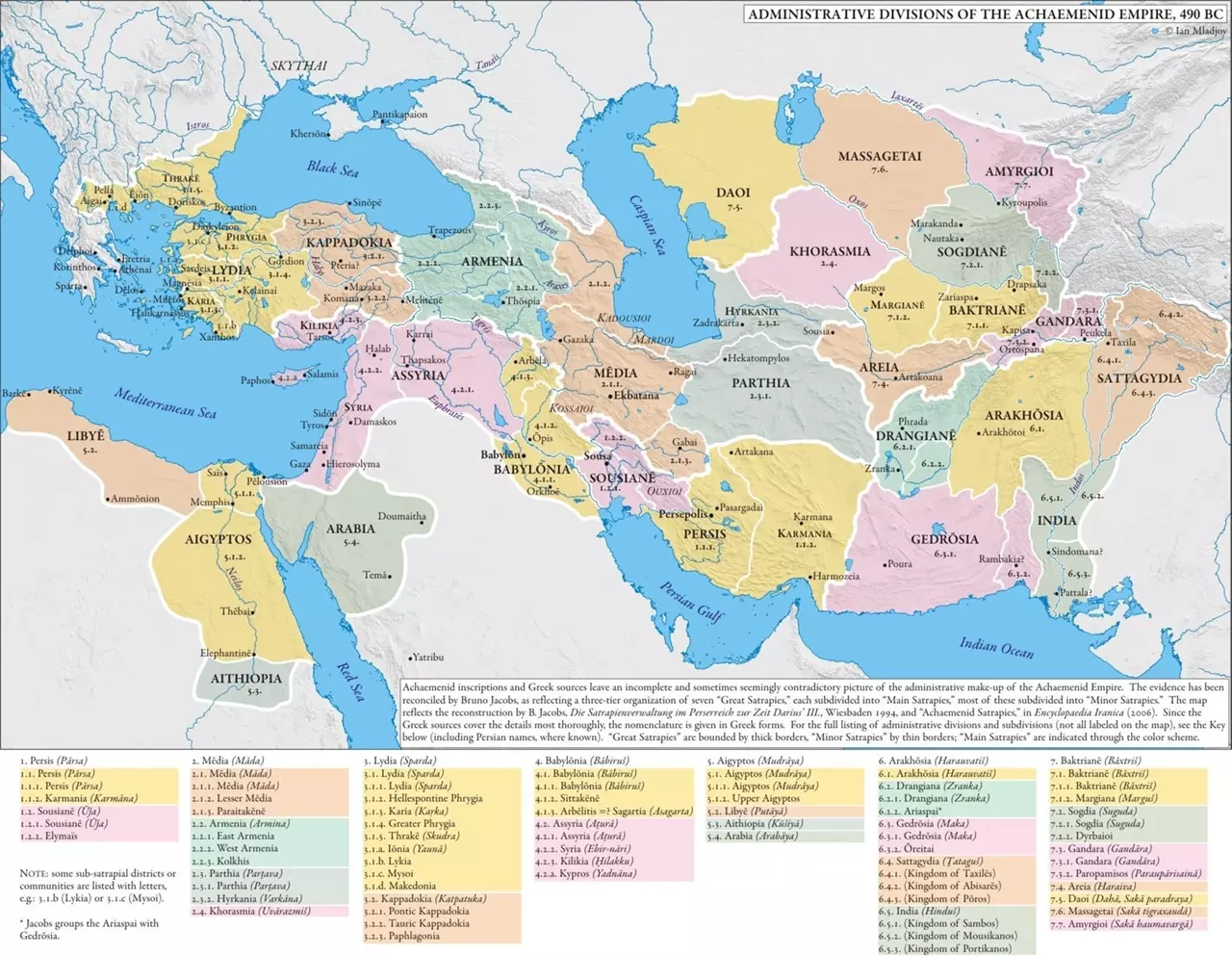
    There will be nothing further to recount in detail. It will just be a set of repetitions of what has already been said. We were shown that the only threat to him were the nobles (the conquered peoples they lost = hee-hee, weaklings = not dangerous), but he made all the nobles his friends, and then founded the territorial division into satrapies and prepared the transfer of power to his son. The very king of Mydia, who was last shown to be resentful and suspicious, did nothing against Cyrus, and disappeared from the narrative altogether, and reappeared only at the very end to marry his daughter to Cyrus. In the end it turns out that all the kings, except for the murdered Assyrian — just voluntarily bowed down to Cyrus. Well, that’s because he’s a holy man. And on this holiness holds the whole monarchy.

    And the recipe for an ideal ruler is simple — be an alpha-male, a Spartan with combat experience, and that’s pretty much it. You don’t need anything else. Just don’t behave like an egregious bastard. That is, suppress aggression. Of course, for 99.9% of real “I’m a man” Spartans it is very difficult, so perhaps the ideal rulers are so rare. But as much as it may seem like some nonsense, that’s really the whole recipe for Xenophonte. In sum, “Cyropaedia” is the story of how an aristocrat, perfect from birth, received a perfect Spartan upbringing (“Lacedaemonian Politics”), went through military campaigns that made him a “man”, and without making a single misfire in his entire life, and without even once facing a real difficulty to overcome it — created an empire in which he conquered everyone with his perfection and raised a whole nation of superhumans by his example. This sounds like an extended version of the panegyric “Agesilaus,” but I assure you, Cyrus is more like a living human being than the Spartan king-Jesus we’ll talk about next.

    Agesilaus — the Son of God who died for our sins.

    In the work “Agesilaus” Xenophontes writes a dithyramb to his friend, and at the same time patron and king of Sparta. It is clear that here the Spartan way of life receives no less praise than in the “Lacedaemonian Polity”. Agesilaus is a descendant of Heracles, and his father was a king, son of a king, grandson of a king, etc., etc., i.e. the origin is as aristocratic as possible! Even better than the descent of King Cyrus.

    In as much as their lineage is the most glorious in the state, so glorious is their state itself in Hellas.

    Besides the fact that the king of Sparta is the best man in the universe and the embodiment of all virtues, Xenophon decides to describe his great deeds as a commander in wars with Persia and other Greeks. Here we see the figure of a kind and religious commander whom even his enemies want to serve, literally as in the Cyropaedia.

    Speaking to his soldiers, he often advised them not to treat prisoners [Persians, barbarians, essentially slaves] as criminals, but to guard them, remembering that they too are human beings.

    We saw the attitude to slaves as people in the work “Oeconomicus”. But of course, for convenience, we will continue to quote only Aristotle’s words about “talking tools”. Yes, this is a wicked irony and a reminder of how selective quoting works to serve the historian’s own ideas. But that’s not the point. More importantly, in Xenophon’s account, Agesilaus did not even enslave the cities, which made it easier for them to surrender to him without a fight. True, he immediately gives an example of mocking treatment of Persian slaves bought at the market, who were supposedly so weak and flabby that their naked display in front of a crowd of soldiers should have convinced the army that all Persians are weak, and it would be very easy to defeat them. These things do not contradict each other in Xenophon’s mind, and in his other book, the Greek History, the real image of Agesilaus more often than not falls into such contradiction with the idealized picture that Xenophon, with all his effort, fails, and inadvertently reveals the cynical behavior of his patron.


    And so, when Agesilaus had already supposedly begun to defeat Persia, as Alexander would later do, suddenly trouble came from the very heart of Greece! Almost all major cities (Athens, Thebes, Corinth, etc.) opposed Sparta, and the king had to return home urgently. On the holy man went … In all his actions the king allegedly never once in his entire life did not make a single mistake … he is literally holier and more sinless than Jesus. And that’s not an exaggeration. In this respect he is like Cyrus, but the latter at least behaved like a human being in everyday life, while Agesilaus is the epitome of stoicism.

    When Agesilaus received the news that in the battle of Corinth eight Spartans and almost ten thousand enemieswere killed , he was not at all happy and, sighing, said: «Alas, what sorrow has befallen Hellas! For if the now dead had remained alive, they would have been quite enough to triumph over all the barbarians!”.

    But in general, battles and the biography of the king are given a lot of space in this book, and it’s not particularly interesting (you can read the history of Sparta on Wikipedia). At first the idea was to just list what would seem interesting from an ideological point of view here. But alas, there is nothing interesting here at all. This book is simply a listing of all areas of human life to show how in each of them Agesilaus was the best on the entire planet Earth. And he could have the most expensive clothes and the best house, but also the most ascetic modesty, etc., and therefore he would not live in such a house on principle, and would go to a camp tent (this is an exaggeration, and there was literally no such example, but the essence is about the same, the king simply had nothing bad, not only in spiritual but also in material terms). All in all, Agesilaus is one of the benchmarks of sycophancy. It doesn’t add anything that wasn’t already said in the Cyropaedia, but it just adds another example to follow.

    Hiero — a most unfortunate tyrant

    Xenophon’s dialog “Hiero” is a conversation between the tyrant and the poet Simonides (a kind of “sophist” among poets), where in the process it is revealed that the tyrant is no different from other mortals, and that he even suffers more and enjoys life less than anyone else. Everything from food consumption, to national popularity, is enumerated. And everywhere the tyrant finds himself on the losing end. On the whole, the dialog is very simple, and in a sense still manifests the theme of noble poverty, which is raised in the dialog “Symposium” and even in “Oeconomicus”.

    As in “Oeconomicus”, classical sensualism, the compass of pleasures and sufferings, and the theme of the five organs of sensation come to the fore here. It is in a sensualistic way that the benefits for the tyrant are evaluated, and Xenophontes nowhere says that this is something bad, this methodology satisfied him in “Oeconomicus”, and satisfies him now. Even though it is the approach of the Sophists and the hedonist Aristippus. As a result, Simonides (which is strange, given his biography as a “sophist”), having sympathized with the poor tyrant, gives him recommendations on how to become a virtuous and enlightened monarch and earn the respect of the citizens of Greece. But if in “Cyropaedia” idealized the Persian monarch, and in “Agesilaus” — the king of Sparta, here we are talking about a man inherently flawed. It is obvious that Hiero did not go through all the circles of Spartan upbringing.

    So, the recipe for success is not complicated. Simonides advises punishments to be delegated to others, and all honors to be done independently in order to win the love of the citizens. The first thing he emphasizes is competition, which should be supported in all affairs, both domestic and public. Xenophontes had already voiced this idea in the Cyropaedia, encouraging soldiers to compete, and it is also heard in his economic works, and not only in them.

    And farming, the most useful of all occupations, but also the most unaccustomed to the use of competition in it, will increase rapidly, if in villages and fields to announce awards for those who best cultivate the land, and the citizens, with a special zeal for this turned their energies, will do many other useful things. The revenue will be increased, and sound temperance in the absence of leisure will hasten its return. In the same way, bad tendencies are much less likely to grow in people engaged in business.

    True, he admits that trade can be useful for the city of merchants, and competition will give its benefit here too. After all, it is better to be engaged in the business of trade than to be engaged in nothing. In general, tip #1 — a good ruler should motivate people to work better. Tip #2 — make personal bodyguards-mercenaries as servants of the whole state and guardians of order and law. Tip #3 — spend personal funds for the public good; and this is, in fact, the basic advice in general:

    For the public good, Hiero, you should not hesitate to spend money from your personal wealth. In fact, I believe that whatever a husband on a tyrannical throne spends on the needs of the city should rather be classed as a necessary expense than his spending on his personal possessions. … First of all, what do you think will do you more honor — a house decorated for an exorbitant price, or the whole city with walls, temples, colonnades, squares and ports? And weapons — what will inspire more fear in your enemies: you yourself, dressed in the most brilliant armor, or the whole city in worthy armor? Take revenues — will they be more plentiful if only your fortune turns, or if you manage to make the fortunes of all citizens turn? … Your competition is with the other chiefs of the cities, and if you alone of all achieve the highest prosperity for the city you rule, be assured that you will emerge victorious from the noblest and grandest competition possible for mortals.

    And the reward for this will be the universal adoration not only of your own citizens, but of all the people of Greece, both living and posterity. Such a tyrant will not be despised or considered a bad man. But if he deserves to be in such a high position, then it turns out that in the eyes of the citizens he is no longer a tyrant at all, and his status will change radically. To be a tyrant is to rule badly and to hold power by force. And if everything is voluntary, it is not tyranny. Xenophonte didn’t even quite realize what he had done. He blurred the lines between tyranny and aristocratic monarchy by making the criterion of evaluation solely the partisanship of the leader.

    Consider the fatherland as your possession, citizens as your comrades, friends as your children, and do not distinguish your sons from your own soul, and you shall try to surpass them all by your own benefactions. For if thou overpower thy friends in doing good deeds, thine enemies will no longer be able to resist thee. And if you fulfill all these things, be assured that you will be the possessor of the noblest and most blessed acquisition possible for mortals: you will be happy without causing envy by your happiness.

    But I was most attracted to the fragments of dialog that speak of love and friendship. In Xenophonte’s “Symposium” Socrates’ company talk a lot about their inner-group relations, and including sexual overtones, so the theme of love here is colored in purely entertaining tones. This may serve as proof for Marxist readers that there was no understanding of romantic love in antiquity (an opinion that is based only on the idealization of the false “meme” that the Greeks, all as one, dissolved their personality in the civic collective, which is refuted by dozens of examples even older than Xenophonte). But in the dialog “Hiero” Xenophont left quite a few fragments about quite traditional, “heterosexual” love with romantic overtones. This and many other fragments from other sources, including ancient lyrics, show that in antiquity there were not only ideas about personality and individuality, but also about romantic love, which, according to Engels, supposedly emerged only in the Middle Ages, together with chivalric romances. However, the theme of romantic love in different angles sounds in almost all of Xenophon’s works, including historical books. Here are examples from “Hiero” on the theme of love:

    We all know, of course, that pleasure brings much more joy if it is accompanied by love. But it is love that least of all wants to dwell in a tyrant, for the joy of love lies in the pursuit not of what is available, but of what is the object of hope. And just as a man who does not know thirst, will not enjoy drinking, so he who has not experienced love, has not experienced the sweetest of sexual pleasures. … Take, for example, the reciprocal glances of the one who is seized by reciprocal love — they are pleasant; pleasant are his questions, pleasant and answers; but most pleasant and stimulating to love struggle and arguments. But to take pleasure against the will of the adolescent, is, in my opinion, more like robbery than a love affair. … When a person is loved by others, those who love him feel pleasure in seeing him near themselves; they gladly do him good, miss him in his absence and with the greatest willingness to welcome his return, share with him the joy of his successes and rush to his aid as soon as they notice that he has failed in something.

  • A review of Xenophonte’s «Oeconomicus»

    A review of Xenophonte’s «Oeconomicus»

    Author of the text: Friedrich Hohenstaufen

    Russian and Ukrainian versions

    Considering the book called “Oeconomicus”, we will focus mainly on what interests us in terms of revealing Xenophon’s ethical-political and philosophical outlook, and in addition we will consider a very atypical work “On Income”, but first — “Oeconomicus”. Philosophical elements appear here almost immediately. Speaking by the mouth of Socrates’ disciple Critobulus, we are advised to evaluate things as “gain” and “loss” through their benefit and harm, and then Xenophontes introduces a sensualistic criterion. Then he (Socrates) shows that people can be slaves of the passions, and this is worse than physical slavery and clearly harmful to the economy. But the hero, who proves himself to be an honorable man, is not afraid of this danger. Nevertheless, even though he is 100 times richer than Socrates, with his high position in Athens these funds are not enough, and he wants to learn how to better manage the household. Socrates, who has no farm and therefore has no experience, cannot ostensibly help in any way, but will still try to analyze what he has observed from others.

    In essence, he advises being a diligent worker. Work harder — better results. On the other hand, we are clearly advised to moderate our consumption, so that in the end, income exceeds consumption. Simply put, almost from the very beginning, the banal “Protestant” ethic is proposed. The house should be organized strictly according to feng shui, so that all things lie in their places, you need order, discipline, strictness, Sparta. But here he introduces the family, and assigns to the husband the task of a provider, and to the wife… an expendable. And the increase in wealth depends only on the wife. If she is bad, there will be ruin, if she is good, then regardless of the level of her husband’s income, she will be able to leave a profit (it does not matter how much, the main thing is that the budget was in the plus). Thus Xenophont removes from the man all responsibility for the household and shifts it to the woman. As a compensation he only adds that in some cases the husband himself is guilty of bad education of the wife (although it is assumed that the wife is simply unlearned and stubborn), but his analogy is at the level of:

    “If the sheep is bad, we usually blame the shepherd, and if the horse has faults, we blame the rider; as for the woman…”

    It is clear that Xenophon’s «Oeconomicus» is a typical philistine guide in the spirit of conservatism, both ethical and economic. Further it will only be confirmed by a number of examples. For example, it says here that craftsmanship is harmful to body and soul, and in general does not befit a noble man (a false meme, which we challenged in the article “Marx does not understand the Greeks”). And here he also extols farming, the Spartan way of life and condemns the building of defensive walls that create weak and cowardly citizens.

    «Shall we be ashamed to follow the example of the Persian king? He, it is said, considers one of the noblest and most necessary occupations to be agriculture and the art of war, and takes extreme care of both.»

    Xenophontes (through Socrates) uses the state structure of Persia as an example of good economic management at the level of a whole country, but it can also be used by analogy from individual farms. And it is desirable to do farming literally, with your own hands, to be a strong warrior and a real man. A separate block is the instruction “how to bring up a wife properly”, which is reduced to the fact that “God has adapted: the nature of woman for domestic labor and care, and the nature of man — for external”, and to the standard kitchen-children-home, sit and stay down. However, for that time this was the norm for “liberal” thinkers as well; but in the case of Xenophonte, it complements the image of a conservative quite well. Like Prudon in “Pornocracy,” he paints a world where women and men complement each other’s shortcomings. And Xenophontes’ basic analogy for how one should act in domestic matters, just like the socialists of the future, connects with the bees in the hive.

    Basically, he teaches his wife the same things that were discussed above — “Protestant” ethics, order and discipline. His house is not decorated on principle (in the dialog “Gieron” he is still fundamentally against spices for food), and his wife also does not use cosmetics and beautiful things on principle. Everything must be strict and primitive, as in Sparta, justifying it with the advantages of natural over artificial (roughly like the logic of those fighting against GMOs and for the Soviet GOST).

    In addition, Xenophontus tries to describe how to conduct business in agriculture, advises to choose a slave as a manager, who should be taught everything that you know yourself, and by his good disposition almost bring him into the family circle, so that he could perfectly cope with affairs in your absence (such “liberalism” with regard to managing slaves is also found in Roman manuals on agriculture, and to some extent it applies to managed slaves as well). In principle, Xenophontus is even less strict here than the Roman Cato, which is even somewhat surprising. Contrary to all the scaremongering of Marxism, slaves here are called “human beings.” But the analogies he uses to educate women, slaves, and children (and not always with the intent to demean) are analogies to animal training. On the one hand, this is crude Spartan conservatism, but on the other hand, he is not ashamed to put man and animal on the same level, although recognizing the differences between humans. Against the background of Christian morality, even of 21st century people, this could even be seen as an unprecedented level of liberalism.

    With all these means, which I myself apply, expecting to make people more obedient, I teach those whom I want to put in charge, and I also help them with this: clothes and shoes, which I have to give to the workers, I do not make all the same, but some worse, others better, so that it is possible to give to a good worker as a reward what is better, and to a bad one what is worse. It seems to me, Socrates,” he remarked, ”good workers have a feeling of disappointment when they see that the work is done by them and yet the same reward is given to those who are not willing to bear the labor or the danger at the right moment. That is why I myself by no means equalize the rewards of good workers with bad ones and praise the manager when he distributes the best things to the most deserving.

    It is not a fact that we are talking about slaves here (although it is hinted at by the fact that he dresses and shoes them himself, and other fragments where “workers” need supervisors, etc.), but this is not only a bourgeois principle of competition and fair remuneration for labor, but also another example of the “liberal” ideal. And then there are purely technical sections about soil properties, fertilizers, sowing, harvesting, etc. As a result, we see not even the most rigid for antiquity guidelines on household affairs, but clearly different from the recommendations of the Sophists, who were not opponents of walls, were not enemies of craft and trade, were not supporters of aristocracy and farmers, and preached neither moderation nor accumulation of capital (see “Anonymus Iamblichi”, “Dissoi logoi” and in general our cycle on the philosophy of the Sophists).

    On income, or Xenophonte as a liberal

    In his work “On Revenue”, Xenophontes asks whether Athens can maintain its luxurious standard of living without plundering the subordinate cities of its “allies”, purely on its own, in a mode of autarky. And will try to prove that yes, they can. After all, Athens is in a great climate zone and most importantly, has silver mines.

    One might also think that the city of Athenians is not without purpose located near the center of Hellas and even the entire universe.

    As we said in the article “Marxism-Xenophonticism”, this work of Xenophon is designed to offer an ideal plan to overcome the crisis. But in reality this plan was not put into action. Therefore, Soviet reconstructions of the Athenian economy based on this work are obviously wrong. So, according to this ideal plan, Athens needed to seriously expand the rights of metics  (non-citizens), keeping a special tax for them, which would have brought serious revenues. He proposes state patronage for merchants and shipbuilders. He suggests reducing bureaucracy to make business easier and make Athens an attractive center for trade. He also realizes that it takes large investments to establish large enterprises. But he believes that if the Athenians could chip in for large military campaigns, they can chip in for large businesses, so that they can receive a steady income as shareholders (as opposed to a net loss on the army). And even after that he proposes that strange utopian financial “pyramid” of buying slaves for the mines, as discussed in the article about Marx. From the above, it is clear that Xenophontus prefers to invest in business instead of subsidizing war. But he goes even further in terms of praising peace policy:

    It is obvious that, for all revenues to flow in abundance, peace is necessary. But in such a case, should not the office of peace keepers be established? After all, the election of such officials would encourage all people to come to our city more willingly and in greater numbers. If anyone thinks that by constantly pursuing a peaceful policy the state will become less strong, less glorious and less influential in Hellas, I must say that he is mistaken: For it is not without reason that it is said that the happiest states are those which live longest in peace; and of all states Athens has the greatest capacity for development in times of peace.

    Most of these are very liberal measures, as for a conservative, although they do concern public (not private) investment and public revenues. True here as well:

    You see, in the same way, private individuals, by banding together in companies and sharing all fortunes and failures with each other, are less exposed to danger in this risky enterprise. And of course you must not be afraid that with this method of mine development the State will embarrass private individuals or, on the contrary, that private individuals will embarrass the State.

    This is far from the first time that Xenophontes has written things that don’t fit the standard description of him as a hardened reactionary and fan of Sparta (though all of that is certainly true as well). Including economic issues, we have already seen in the work “Cyropaedia” how he proposed an international confederation based on economic grounds, and in the work “Hiero” he proposed to promote competition as much as possible for the effective development of the city’s economy.